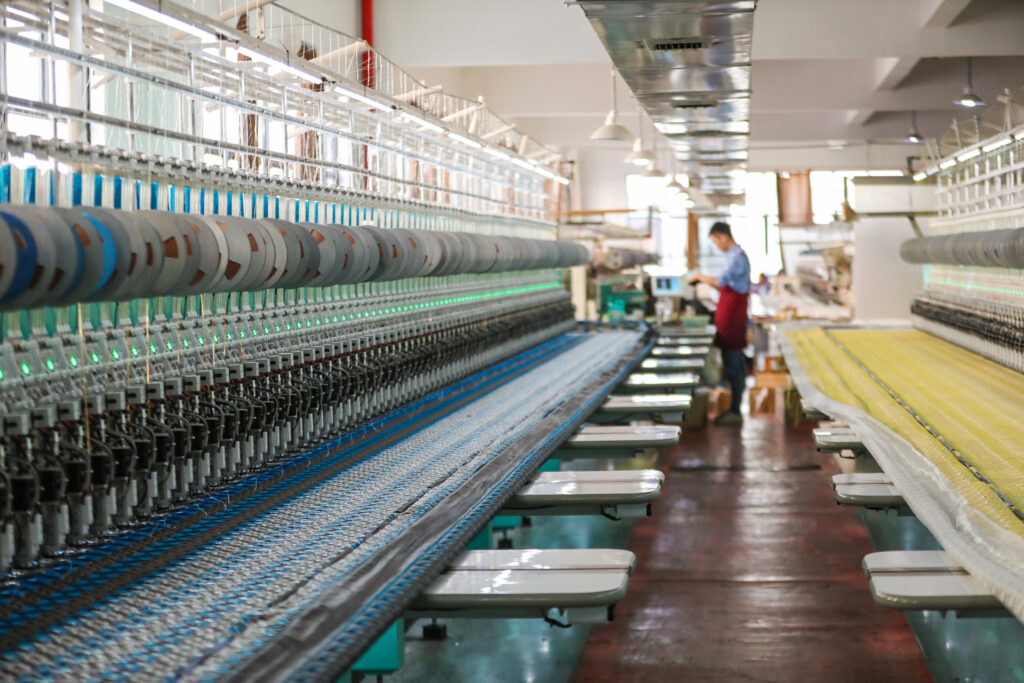
As fabric sourcing shifts from large-volume purchasing to more flexible orders, effective collaboration is becoming increasingly important.
Fabric buyers today often need more styles, smaller quantities, and more frequent replenishment. Buyers want to control inventory and respond quickly to market changes, while suppliers must balance production efficiency, costs, and delivery schedules.
For fancy fabrics such as embroidered fabrics, lace, and sequined fabrics, differences in base fabrics, designs, colors, and production techniques can make order management even more complex.
The challenge of small-batch orders is not simply the smaller quantity. It is the communication, confirmation, and coordination required for every style.
So, how can buyers and suppliers work together more efficiently?
1. Order Volume Does Not Always Reflect Workload
A large order with consistent specifications may be relatively straightforward to manage.
By contrast, an order involving multiple styles may require separate confirmations for base fabrics, designs, colors, decorative techniques, and delivery schedules—even when the total volume is similar.
Order complexity depends not only on total yardage but also on the number of styles, production requirements, and completeness of the information provided.
2. A Real Case: A 100,000+ Meter Fancy Fabric Order
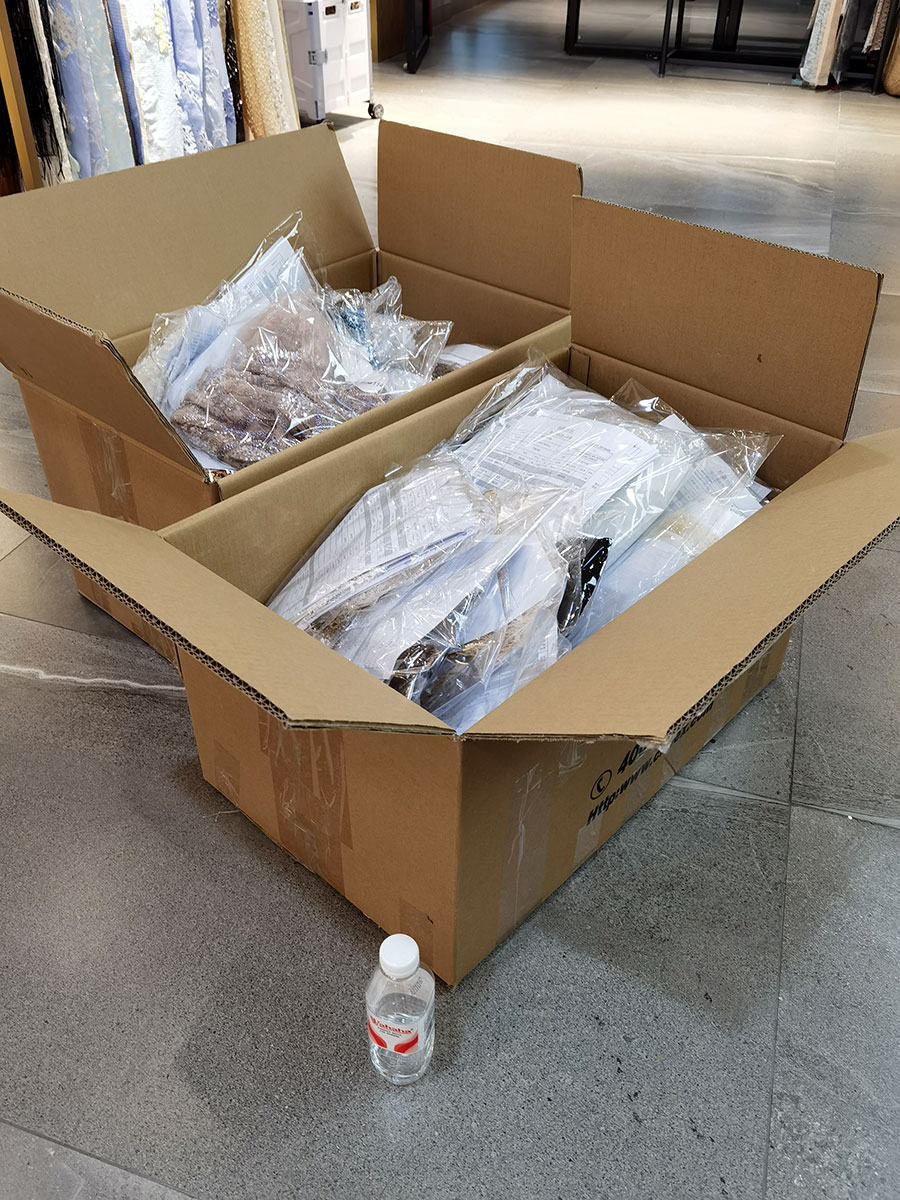
Recently, one of Naying Textile’s long-term customers in South America placed an order exceeding 100,000 meters, covering embroidered fabrics, lace, and sequined fabrics.
Although the total volume was substantial, the order involved multiple styles with different requirements. We spent an entire day discussing the details with the customer to ensure everything was clearly understood.
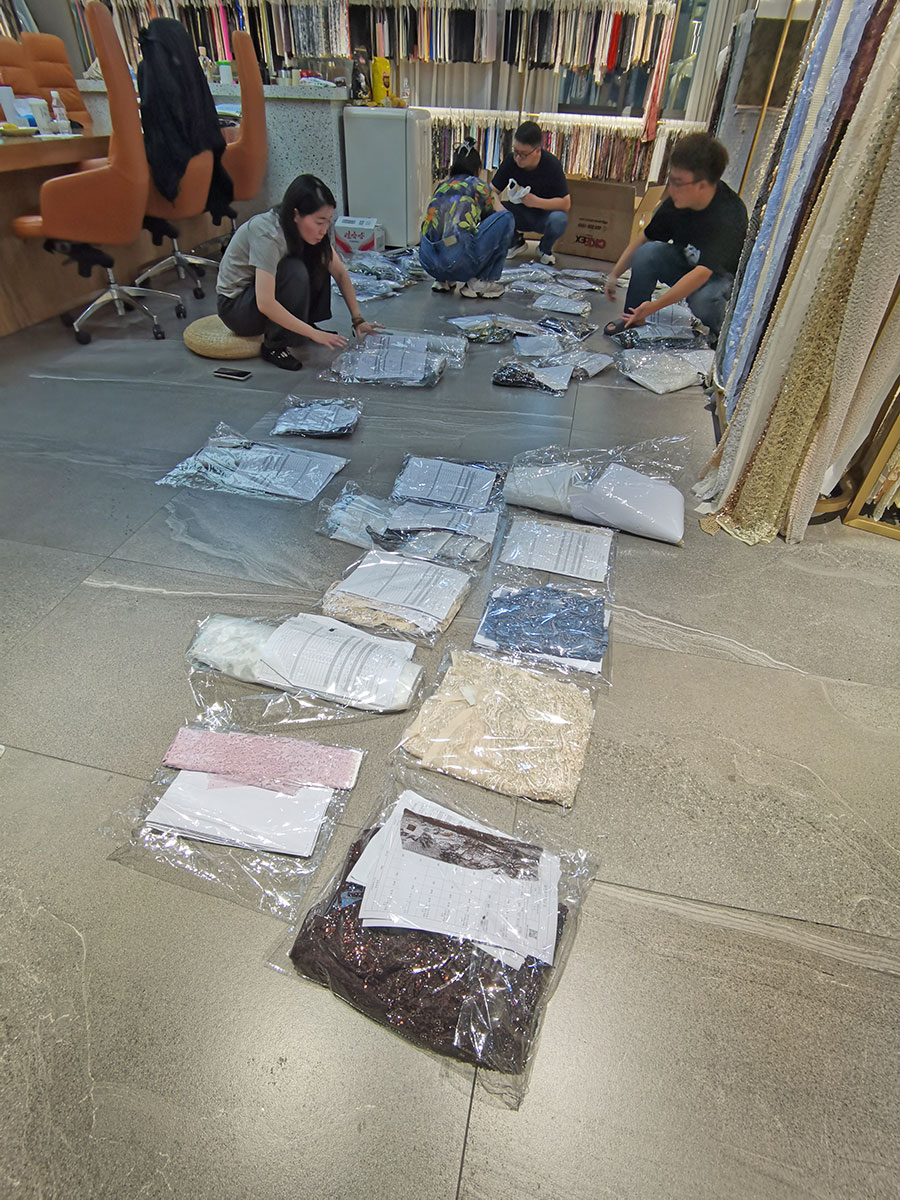
After the order was confirmed, we brought together the internal team responsible for execution to discuss the production plan and coordinate the requirements of different products.
This experience demonstrates that even large orders can require extensive coordination when multiple styles and production techniques are involved.
A fabric supplier’s role goes beyond sourcing materials and arranging production. Understanding customer requirements, confirming details, and coordinating execution are equally important.
3. Five Ways to Improve Small-Batch Order Efficiency
1. Provide complete order information upfront
Share product references or samples, specifications, colors, production requirements, quantities, target prices, and expected delivery dates. Clearly identify any details that have not yet been finalized to reduce repeated communication.
2. Share purchasing plans in advance
Even when quantities are not confirmed, sharing potential styles, estimated purchasing timelines, and anticipated replenishment needs helps suppliers evaluate material availability, production capacity, and lead times.
Forecasts should be clearly distinguished from confirmed orders.
3. Consolidate compatible orders where possible
If different styles have compatible specifications, base fabrics, or production requirements, buyers and suppliers can explore combining purchasing or production arrangements.
Feasibility depends on the specific fabrics, techniques, equipment, and quality requirements.
4. Discuss quantity, pricing, and lead times together
Small-batch orders may involve higher unit costs due to sampling, style changes, and additional coordination. Buyers and suppliers should discuss pricing and delivery options based on actual production conditions rather than focusing on unit price alone.
5. Establish a clear communication process
Use a shared order sheet to track style numbers, specifications, quantities, confirmation status, and delivery dates.
Any changes to colors, specifications, quantities, or schedules should be documented promptly, with their impact on cost and delivery confirmed by both parties.
4. Sustainable Partnerships Require Mutual Understanding
Buyers need competitive prices, consistent quality, and flexible supply. Suppliers need reasonable margins, clear requirements, and realistic production schedules.
If suppliers are expected to absorb all additional costs associated with communication, sampling, and coordination, long-term cooperation may become difficult to sustain. At the same time, suppliers must respond promptly to changing customer needs and offer practical solutions.
For long-term partnerships, mutual understanding, transparent communication, and reliable execution are often more valuable than simply securing the lowest price for a single order.
5. How Naying Textile Supports Multi-Style Fancy Fabric Orders
Naying Textile specializes in fancy fabrics for overseas customers, including embroidered fabrics, lace, sequined fabrics, and other specialty textiles.
When handling orders involving multiple styles and production techniques, we emphasize early-stage communication, detailed requirement confirmation, and internal team coordination to help customers move more smoothly from product requirements to order delivery.
We believe flexible supply is about more than accepting different order quantities. It means understanding customer needs and working together to find practical, executable solutions.
Frequently Asked Questions (FAQs)
Q1: Why can small-batch fabric orders require more management work?
Multiple styles may involve different specifications, production techniques, sampling requirements, and delivery schedules, each requiring separate communication and coordination.
Q2: Are small-batch fabric orders always more expensive?
Not necessarily. Unit costs depend on fabric type, production techniques, order quantity, sampling requirements, material sourcing conditions, and production arrangements.
Q3: How can buyers improve small-batch order efficiency?
Provide complete product information, share purchasing plans early, consolidate compatible orders where practical, and communicate changes promptly.
Q4: Can different fancy fabrics be combined in one production arrangement?
Sometimes. Feasibility depends on base fabrics, production techniques, equipment, and quality requirements.
Q5: How can buyers build long-term relationships with fabric suppliers?
Establish clear communication, agree on realistic pricing and delivery schedules, and work together to manage coordination requirements and production costs fairly.
Q6: What Types of Fabric Sourcing Needs Is Naying Textile Best Suited For?
Naying Textile is well suited to overseas buyers sourcing multiple styles of fancy fabrics, particularly projects involving a combination of embroidered fabrics, lace, and sequined fabrics. We also support orders that require coordination across different production techniques and resources. For customers who regularly develop new styles, replenish different fabric designs, and seek a long-term supplier relationship, Naying Textile offers product sourcing and order coordination support.
Looking for a supplier experienced in multi-style fancy fabric orders?
Contact Naying Textile to discuss your product requirements and purchasing plans.