Design and Construction Features
Repeating Geometric Openwork
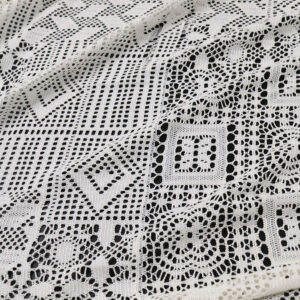
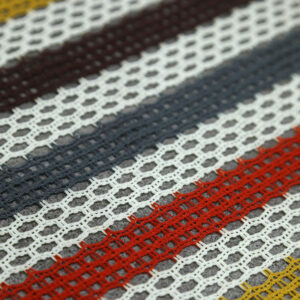
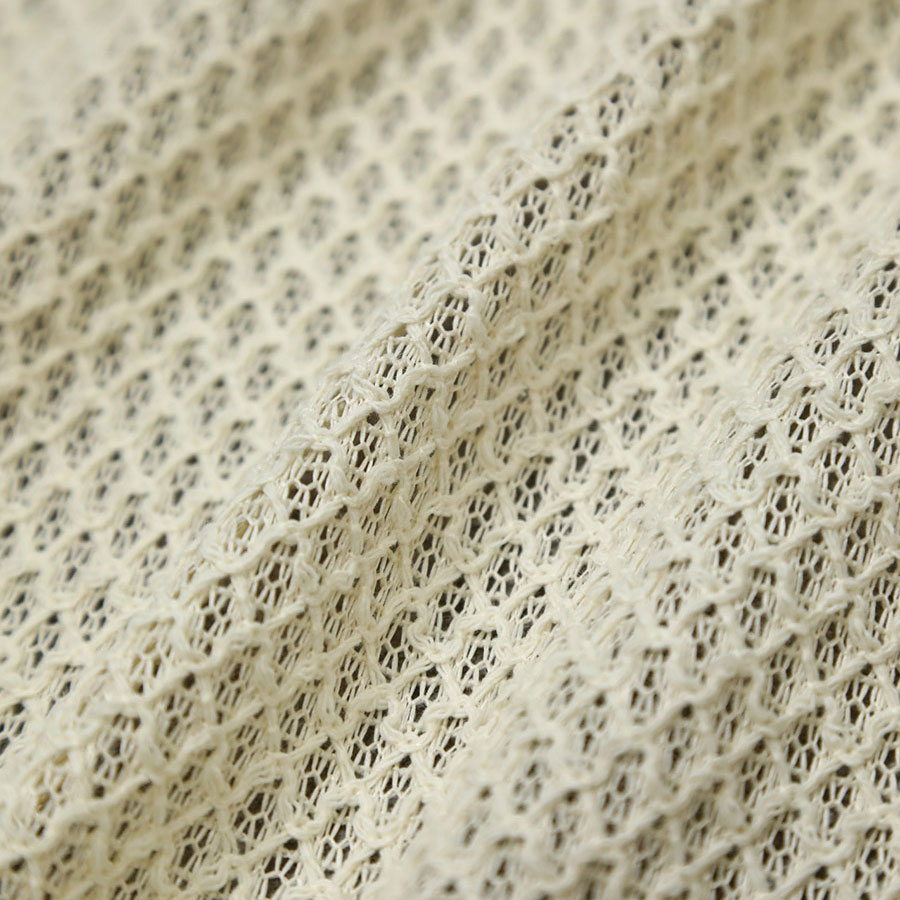
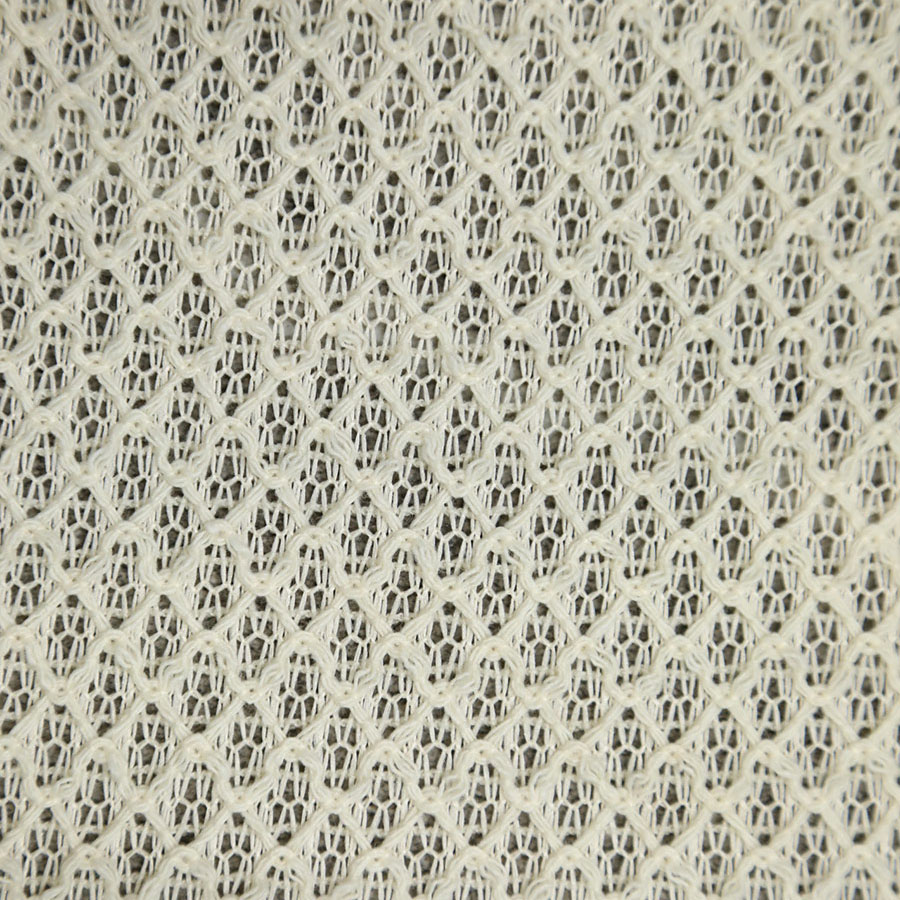
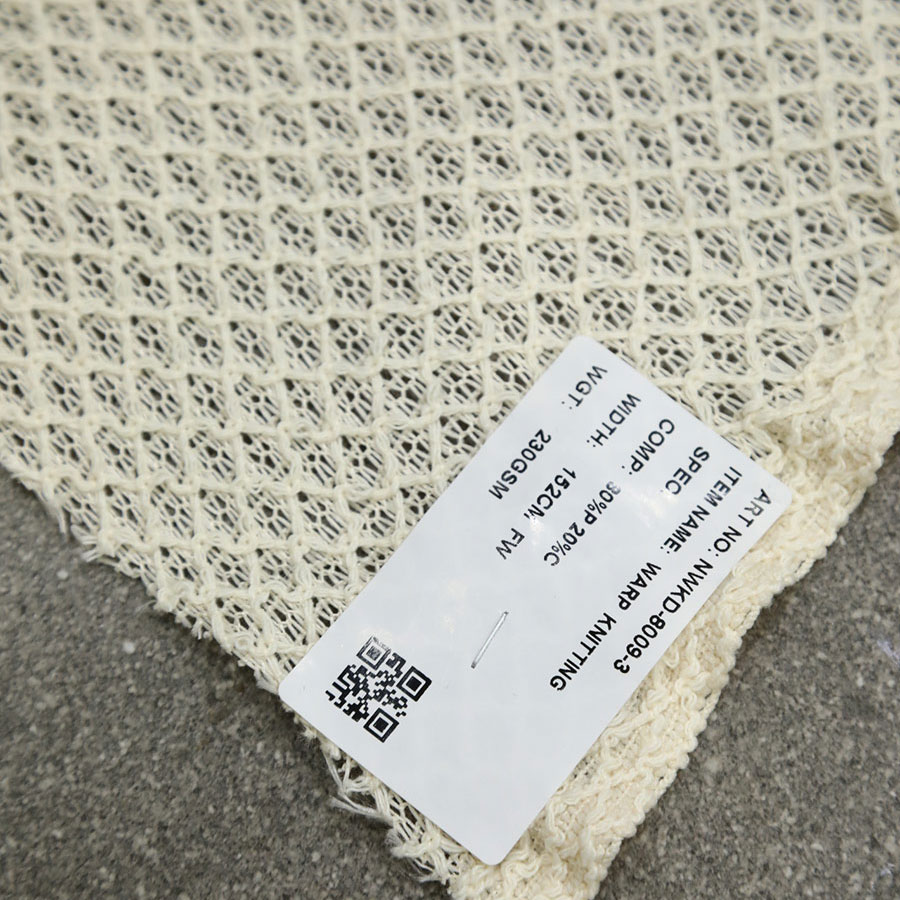
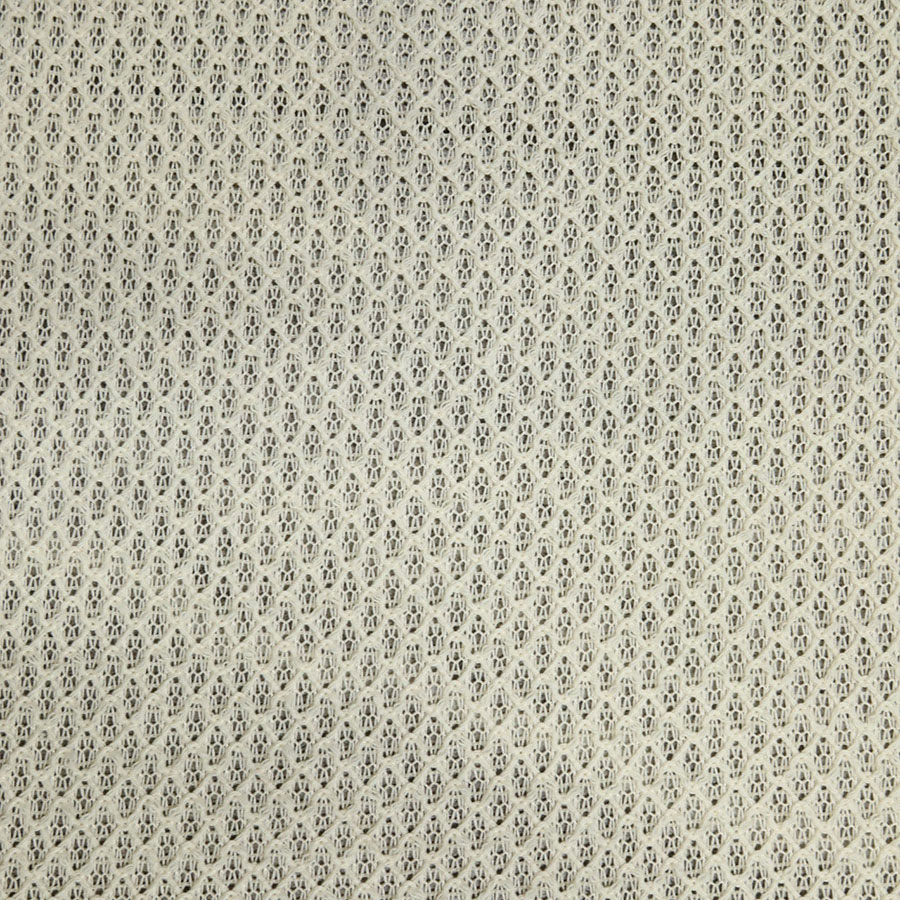
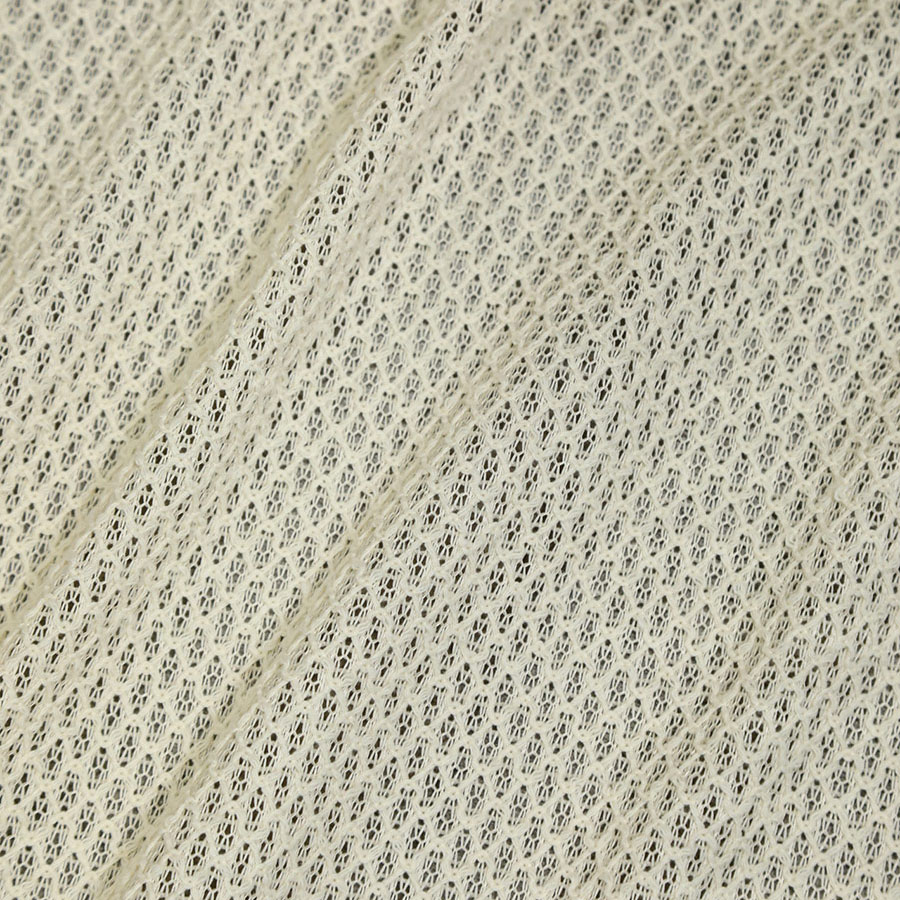
The fabric features a consistent arrangement of looped shapes connected by open spaces. This repeating geometric structure creates visual rhythm across the surface, offering more texture and detail than a plain mesh.
Coarse-Gauge Dimensional Texture
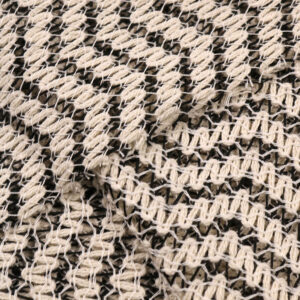
The relatively bold yarn structure gives the fabric a pronounced, tactile appearance. Raised loops and connecting strands form a dimensional surface while keeping the overall design visually clean and orderly.
Minimalist and Versatile Appearance
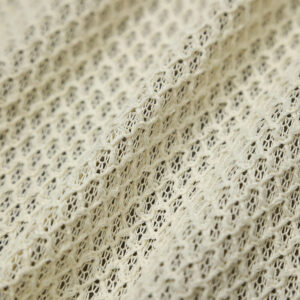
The understated ivory color allows the openwork construction to remain the focus. Its combination of geometric patterning and textured surface gives the fabric a balance of casual character and refined simplicity.
Applications
The geometric openwork texture may be considered for:
- Women’s tops and pullovers
- Casual cardigans and lightweight layering pieces
- Textured skirts and dresses
- Contemporary resortwear and relaxed apparel collections
For garments requiring additional coverage, a lining or coordinated underlayer may be considered. Final suitability should be assessed through sampling and garment construction tests.
Fabric Development
For NEW-8009-3, development discussions can focus on the geometric openwork structure, yarn appearance, and overall fabric character. Depending on the project brief and production feasibility, buyers may discuss adjustments to the color or design presentation based on a reference or sample.
Naying Textile is a manufacturing supplier and exporter of fancy fabrics for garment applications, based in Keqiao, Shaoxing, China.
FAQs
Q1: What creates the geometric texture of NEW-8009-3?
The surface is formed by a repeating arrangement of looped elements and connecting knitted strands. The combination of raised yarns and open spaces creates the fabric’s distinctive geometric texture.
Q2: Is the openwork pattern uniform across the fabric?
The design is based on a repeating geometric structure, giving the surface a consistent visual rhythm. Buyers should review a fabric sample to assess the pattern scale and appearance for their intended garment.
Q3: Should garments made with this fabric include a lining?
That depends on the garment design and the desired level of coverage. Because the construction includes open spaces, a lining or underlayer may be appropriate for some styles. This should be confirmed through sample evaluation.
Q4: What should designers consider when placing pattern pieces on this fabric?
The openwork pattern and its repeat should be considered during marker planning and cutting. Reviewing the fabric’s pattern direction, repeat, and placement on a garment sample can help achieve a balanced finished appearance.
Q5: Can the geometric design be used as a reference for further development?
A reference sample or design brief can be discussed with Naying Textile. Possible development directions will depend on the requested changes and production feasibility; any development costs can be confirmed before proceeding.

Certification: Global Recycled Standard ( GRS, RCS )